Utility Billing
Kansas Solar Sizing Rules Changed in 2026: What to Check Before Adding Panels
New Kansas rules link generating capacity, export capacity, and expected load for customers of the state's investor-owned utilities, making panel additions a design and contract issue.

A proposal to add solar panels in Kansas now requires more than comparing the new panel count with the old array. For systems operating under an interconnection agreement on or after July 1, 2026, Kansas law connects the system's generating capacity, its approved export capacity, and the customer's expected electric load. A design that ignores those distinctions may not match what the utility will approve.
The Kansas Net Metering and Easy Connection Act requires net metering from the state's investor-owned utilities, Evergy and Liberty Utilities' Empire District service. Municipal utilities and electric cooperatives are not required by this statute to offer the same program. Ask your actual provider for its current policy.
Who the Kansas net-metering rule covers
The Kansas Corporation Commission says the statutory program applies to customers of the state's two investor-owned electric utilities. Many cooperatives and municipal providers have adopted their own form of net metering, but their boards and local policies control those offerings. A Kansas address alone does not establish the applicable sizing or export rule. The name on the electric bill does.
Before relying on this article, identify whether the property receives delivery service from Evergy, Liberty, a rural electric cooperative, or a municipal utility. An installer should not apply an Evergy or Liberty rule to a cooperative or city account without confirming that provider's own requirements.
What changed for systems operating on or after July 1, 2026
For a customer-generator that begins operating under an interconnection agreement on or after July 1, 2026, the generating capacity of the renewable resource generally may not exceed its export capacity by more than 50%. Storage is excluded from that calculation unless it can add export capacity and is not part of an export-limited system.
Kansas also permits a system to be designed so the power exported differs from total generating capacity. In that situation, the customer owns and maintains the necessary export-limiting device. The utility may require witness testing, may perform later tests, and must approve any increase in export capacity. If the device fails to limit exports for more than 15 minutes during one event, the customer agrees to stop operating until it is repaired or reprogrammed.
Generating capacity and export capacity are not the same number
- Generating capacity describes how much the renewable resource can produce under its rated design.
- Export capacity describes how much power the system is allowed to send through the interconnection to the utility grid.
- An export-limiting device can keep exports below total on-site generating capacity, but the settings and testing become part of the approved design.
- Adding panels, changing inverters, or changing storage controls may affect one or both figures.
How Kansas calculates expected-load sizing
The KCC describes the load-based method as dividing the customer's kilowatt-hour consumption for the previous 12 months by 8,760 hours and then dividing by a capacity factor of 0.144. If the property lacks adequate historical data, the rule uses 7.15 kilowatt-hours per square foot of conditioned space as the annual-consumption input. The result is rounded to a standard AC size increment.
AC values from 2 through 20 kilowatts are rounded up to the nearest 2-kilowatt increment. Values above 20 through 150 kilowatts are rounded up to the nearest 5-kilowatt increment. This formula is a regulatory sizing method. It is not a guarantee that the resulting project is economical, appropriate for the roof, or certain to receive interconnection approval.
Why adding panels or storage needs a fresh review
- Obtain the existing interconnection agreement and its approved AC export capacity.
- Ask for the proposed total panel capacity, inverter AC rating, storage configuration, and export limit after the expansion.
- Request the 12 months of usage used in the expected-load calculation and reproduce the calculation.
- Confirm in writing whether the utility treats the project as a modification, a new interconnection, or another category.
- Do not energize changed equipment before required utility approval and testing are complete. Questions about electrical design belong with licensed professionals and the utility.
What Kansas net excess generation is worth
For qualifying systems that began operating on or after July 1, 2014, the KCC says monthly net excess generation is credited at no less than 100% of the utility's monthly system average cost of energy per kilowatt-hour. That is not the same as promising a fixed retail-rate credit for every exported kilowatt-hour over the life of a solar agreement. Current tariffs, rate schedules, time-varying periods, system vintage, and utility territory matter.
A larger array can produce more energy without producing proportionally more bill savings if a greater share is exported at a lower value. Compare the installer's annual savings model with the current tariff and realistic self-consumption, rather than treating every generated kilowatt-hour as equally valuable.
Documents to compare before signing an expansion
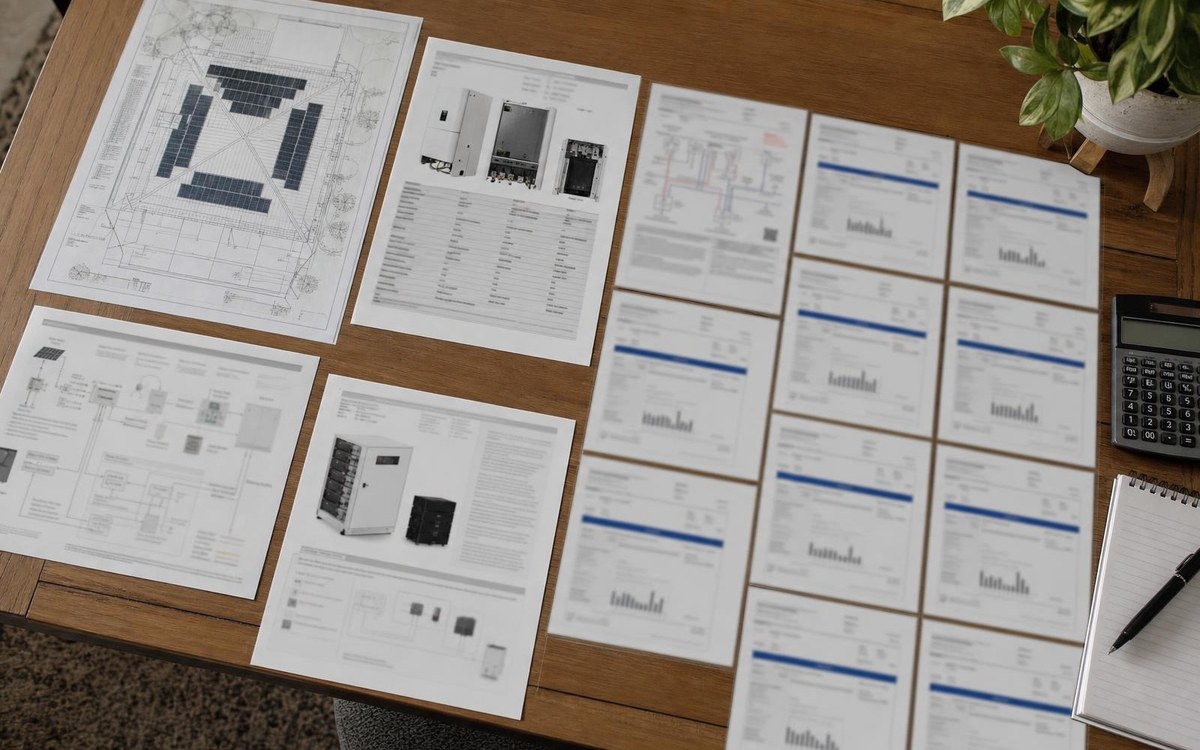
Keep the existing and proposed interconnection applications, one-line diagrams, panel and inverter ratings, export-control settings, storage documents, 12 months of bills, utility tariff, savings model, and sales agreement together. Use Solar Exit's solar situation document checklist and compare billing promises with the utility and payment sections.
Kansas solar sizing FAQs
Does this rule cover every Kansas electric utility?
No. The statutory net-metering mandate covers the investor-owned utilities. Municipal and cooperative providers may have different programs and requirements.
Can generating capacity be larger than export capacity?
It can, subject to the 50% limit and the rules for export-limited designs that apply to systems operating on or after July 1, 2026. Confirm the specific design and approval with the utility.
Does adding more production guarantee equal bill savings?
No. Savings depend on when the home uses energy, what it exports, the applicable credit, fixed charges, financing, and the accuracy of the production model.
Sources Reviewed
- Kansas Corporation Commission, Net Metering in KansasReviewed September 10, 2026Official regulator guidance for the July 1, 2026 generating-capacity and export-capacity rules, export-limiting controls, expected-load sizing formula, utility scope, and net excess generation treatment.
- Kansas Legislature, House Bill 2527 (2024)Reviewed September 10, 2026Official legislative record for the amendments to the Kansas Net Metering and Easy Connection Act that phase in the current sizing and export provisions.